NBA Live Betting: How In-Play Wagers Work for UK Punters
 Available in US
Table of Contents
- NBA Live Betting: How In-Play Wagers Work for UK Punters
- How NBA Live Odds Move in Real Time
- Live Markets Available During an NBA Game
- Live Streaming NBA Through UK Betting Sites
- Timing Your In-Play Bets: Quarter Breaks, Timeouts, and Momentum Shifts
- Mobile Live Betting: Speed, Latency, and App Comparison
- Cash Out and Partial Cash Out on NBA Live Bets
- Risks and Discipline in Live NBA Wagering
- Frequently Asked Questions

NBA Live Betting: How In-Play Wagers Work for UK Punters
The first time I placed a live NBA bet, it was an accident. I had meant to back the Raptors pre-game but got distracted, and by the time I opened the app, the game was three minutes into the first quarter. The odds had already shifted — Toronto was down 9-2 and the moneyline had drifted from 4/5 to evens. I placed the bet anyway, Toronto rattled off a 14-2 run, and I collected a return that was 20% better than the pre-game price would have delivered. That accidental discovery — that the live market overreacts to early-game variance — became one of the most productive edges in my entire NBA approach.
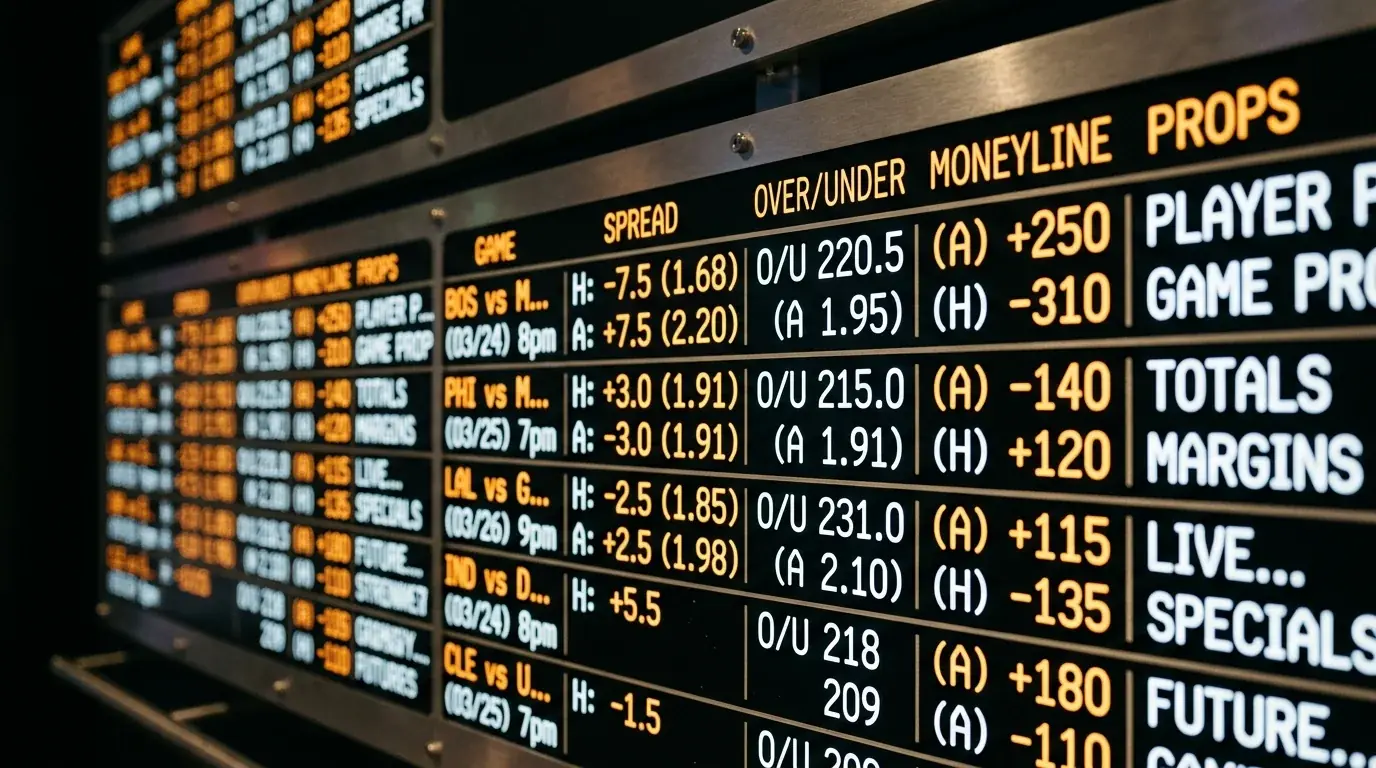
Live betting, or in-play wagering, now accounts for 62.35% of all online sports betting revenue globally, growing at a compound annual rate of over 13%. In the NBA specifically, the combination of frequent scoring, natural stoppages (timeouts, quarter breaks, free throws), and volatile momentum swings makes basketball one of the most dynamic live betting sports available. UK sportsbooks have responded by expanding their in-play NBA menus dramatically — what used to be a basic moneyline and total during the game now includes quarter spreads, next-team-to-score markets, rolling player props, and more.
But live betting rewards speed, discipline, and a different kind of preparation than pre-game wagering. The odds move fast, the emotional pull is stronger (you are watching the game unfold in real time), and the margin for error is slimmer. This guide covers how NBA live odds actually behave, which in-play markets offer genuine value, and how to avoid the traps that turn live betting from an edge into a leak.
See also: nba betting online for the full NBA betting guide.
How NBA Live Odds Move in Real Time
NBA live odds are not updated by a person watching the game and guessing. They are generated by algorithms that process the current score, time remaining, team strength ratings, and historical patterns of how games with similar scorelines tend to finish. Understanding the model behind the numbers — even at a surface level — gives you a genuine advantage over the recreational bettor who is simply reacting to what they see on screen.
The key variable is win probability, which shifts with every possession. Research analysing 2,295 NBA games over a decade found that 19% of matchups remain within 10 points heading into the fourth quarter. That means roughly four out of five games have a clear trajectory by Q4 — and the live odds reflect this. Early in the game, a 10-point deficit barely moves the moneyline, because the model knows that NBA teams routinely erase double-digit leads. Late in the fourth quarter, that same 10-point deficit is essentially a death sentence, and the odds price it accordingly.
This creates a specific pattern that I exploit regularly: the live market undervalues early-game deficits and overvalues late-game deficits. A team trailing by 12 after the first quarter has roughly the same chance of winning as their pre-game probability suggested minus a modest penalty. But the live odds often price them as if that 12-point hole is twice as significant as it actually is, because recreational bettors panic-sell positions on teams that are “losing.” If your pre-game analysis supported a team and they fall behind early, the live line often offers you a better entry point than the pre-game price — which is exactly what happened with my accidental Raptors bet.
Conversely, the model tightens dramatically in the final five minutes. A 6-point lead with two minutes remaining in the fourth quarter produces live odds that are extremely accurate, because the remaining variance is tiny. There is very little edge available in the last two minutes of a close game — the algorithm has too much data and too little uncertainty to misprice anything meaningfully. My rule: if the fourth quarter is past the halfway mark, I close my live betting app.
Live Markets Available During an NBA Game
Not all live markets are created equal, and knowing which ones to focus on saves you from drowning in options while the clock is running. At UK sportsbooks, the core live NBA markets break down into three tiers based on liquidity and pricing efficiency.
The first tier — live moneyline, live spread, and live totals — mirrors the pre-game core. These are the most heavily traded, the most competitively priced, and the most reliably available throughout the game. Live spreads adjust after every scoring run, with the line shifting to reflect the current margin and time remaining. If a team opened at -5.5 pre-game and is leading by 14 midway through the second quarter, the live spread might sit around -6.5 to -8.5 depending on the model’s assessment of whether the lead is sustainable.
The second tier includes quarter and half-time markets that are available live. You can bet on the spread or total for the current quarter while it is in progress, or on the second-half outcome at halftime. These markets are where I find the most actionable value, because they isolate a shorter time window and reduce the noise. A second-half total, for example, filters out whatever chaos the first half produced and asks a clean question: how will these two teams score over the remaining 24 minutes?
The third tier covers novelty live markets: next team to score, next player to score, method of next basket (two-pointer, three-pointer, free throw). These carry wider margins, lower limits, and less sophisticated pricing. They are entertainment products, not analytical opportunities. I bet them occasionally for fun during All-Star Weekend or Christmas Day games, but they have no place in a disciplined live betting strategy.
One market worth highlighting sits between the second and third tiers: live player props. Some UK sportsbooks offer rolling over/under lines on individual player stats (points, rebounds, assists) during the game. These update based on the player’s current stat line and projected pace. When a sportsbook is slow to adjust after a player picks up early foul trouble and heads to the bench, the under on their points line can offer genuine value.
Live Streaming NBA Through UK Betting Sites
You cannot bet live effectively if you cannot watch the game. That sounds obvious, but the gap between seeing the action in real time and relying on a sportsbook’s text-based play-by-play is the difference between informed wagering and blind guessing. The visual information — a star player limping, a coach going to his bench early, a team’s body language after a disputed call — does not show up in a score ticker.
Sky Sports broadcasts 170 NBA games per season to UK viewers, covering the marquee matchups and a good chunk of the regular-season schedule. That is the most reliable high-quality feed available without a VPN or international subscription. NBA League Pass, with its 12.4 million global subscribers, offers the full slate for UK-based fans willing to pay the subscription — and crucially, it covers the mid-week games that Sky Sports skips, which are often the games with the softest live lines because fewer eyes are on them.
Several UK sportsbooks also offer live streaming of NBA games directly through their platforms, usually requiring a funded account or a small qualifying bet. The quality varies, and the streams typically run on a 5-10 second delay relative to the broadcast feed. That delay matters for live betting, because the sportsbook’s odds update based on their own data feed (which is faster than your stream), meaning you are sometimes placing bets on odds that already reflect information you have not yet seen. The workaround: use the sportsbook stream for visual context but do not rely on it for timing your bets. If you spot something significant (an injury, a momentum shift), check whether the live odds have already moved before acting.
More than 1.3 billion hours of live NBA content were consumed globally across linear and streaming platforms in the 2025-26 season — a 93% year-on-year increase. That explosion of viewership tracks directly with betting engagement, and UK punters who invest in reliable streaming access give themselves a structural advantage over those who bet blind.
Timing is worth addressing for UK-based live bettors. Most NBA games tip off between midnight and 3:30 a.m. GMT during the regular season, with weekend matinees starting around 9 p.m. or 10 p.m. That schedule means live NBA betting in the UK is inherently a late-night activity. I have learned to plan for this rather than fight it — pre-selecting the one or two games I want to bet live on, setting up my stream and sportsbook app in advance, and cutting off before fatigue compromises my judgement. Trying to live-bet a full West Coast game that tips off at 3:30 a.m. is a recipe for sloppy decisions. Picking one early-evening game and executing well is the smarter play.
Timing Your In-Play Bets: Quarter Breaks, Timeouts, and Momentum Shifts
If live betting is about exploiting mispricing, then timing is the mechanism through which that exploitation happens. The NBA’s structure provides natural windows where the odds are most likely to be off — and windows where they are least likely to offer value.
Quarter breaks are the most valuable reset points. When the first quarter ends, the live model recalibrates based on 12 minutes of data, and the second-quarter opening line sometimes lags behind what the first quarter actually revealed about pace, rotation, and matchup dynamics. I have found that the first 90 seconds after a quarter break — before the market settles — is when the best live prices appear. The same applies at halftime, where the longer break allows for more thorough recalculation but also introduces uncertainty about second-half adjustments that coaches will make.
Timeouts are shorter windows but equally useful. When a team calls a timeout during a 10-0 opposition run, the live odds have already adjusted to reflect the run. But the timeout itself often halts the bleeding — the trailing team regroups, adjusts defensively, and comes out of the break with renewed focus. Betting the team that called the timeout immediately after the break (before the market sees whether the adjustment works) is a move I make selectively, and it has been positive over my tracked sample.
García and colleagues documented that shooting efficiency drops significantly as games progress, with the sharpest decline hitting in the fourth quarter. For live totals, this means the scoring pace you observe in the first half overstates the second-half trajectory. If the live total for the remainder of the game looks calibrated to a first-half pace, the under has structural support. I lean toward live unders in the third and fourth quarters more often than overs, and my records show that bias has been modestly profitable over three seasons.
Mobile Live Betting: Speed, Latency, and App Comparison
Roughly 78% of all online sports wagers are placed through mobile devices, and among 18-24 year olds in the UK, that figure climbs to 76% for gambling activity specifically. Live NBA betting is overwhelmingly a mobile experience, and the quality of your app directly affects your ability to act on opportunities before they vanish.
Speed is the critical variable. The time between tapping “place bet” and receiving confirmation — known as bet acceptance latency — varies dramatically across UK sportsbook apps. On a fast app, the round trip takes under two seconds. On a slow one, it can stretch past five seconds, during which the odds may have moved and your bet either gets rejected or accepted at a worse price. For pre-game wagers, this latency is irrelevant. For live betting during a fast-paced NBA game, it is the difference between capturing value and missing it.
Beyond speed, the live betting interface matters. The best apps for NBA in-play wagering display the live odds, the current score, and the bet slip on a single screen without requiring navigation between tabs. Apps that force you to scroll through a menu of 50 markets to find the live spread waste precious seconds. I test this before committing significant volume to any platform: can I go from opening the app to confirming a live spread bet in under 10 seconds? If not, the app is a liability for in-play wagering.
Push notifications for NBA line movements, injury updates, and in-game milestones (a player approaching a prop line) are useful supplements but should not replace your own observation. Notifications arrive on the platform’s schedule, not yours, and by the time you react to a push alert about a line shift, the market has already moved past the opportunity. Use notifications for awareness, not for trade execution. For more on targeting specific game periods, the guide to NBA quarter and half-time betting breaks down period-specific strategies in detail.
Cash Out and Partial Cash Out on NBA Live Bets
Cash out is the feature that sportsbooks promote most aggressively during live betting — the green button pulsing on your screen, showing a guaranteed profit you can lock in right now. And sometimes, taking that profit is the right call. But more often than not, cash out is a tool designed to benefit the sportsbook, not you.
The mechanics are simple: the sportsbook offers to settle your bet early at a price that reflects the current state of the game. If you backed a team at 2/1 and they are now leading comfortably, the cash-out offer might return 80% of your potential full payout. You get guaranteed money; the sportsbook gets to close out a losing position at a discount.
Partial cash out — available at many UK sportsbooks — lets you lock in a portion of the profit while leaving the rest of the bet active. This is more useful than full cash out in most scenarios, because it lets you de-risk without completely surrendering the upside. If I have a pre-game bet that is sitting in a strong position at halftime, I might cash out 40-50% and let the remainder ride. That way, I secure some profit regardless of the second-half outcome while maintaining exposure to the full return.
My general rule: I cash out when new information changes my assessment of the game, not when fear of losing does. If a star player picks up a fourth foul early in the third quarter and my bet depended on their continued presence, that is an information-driven cash-out decision. If I am simply nervous about a six-point lead shrinking, that is emotion, and emotion is not a strategy.
Risks and Discipline in Live NBA Wagering
Adam Silver has spoken candidly about the NBA’s work with betting companies to put additional controls in place to prevent manipulation, acknowledging that the relationship between professional sport and wagering is still evolving. That candour from the league’s commissioner should tell you something: even the people running the NBA recognise that the intersection of live viewing and live betting creates risks that did not exist in the pre-smartphone era.
Get practical advice in our NBA live betting tips article.
The biggest risk for individual punters is not match-fixing or market manipulation — those are rare events with severe consequences for the perpetrators. The biggest risk is behavioural: live betting is designed to keep you engaged, and engagement becomes a problem when it overrides discipline. The live betting interface is a dopamine delivery system. Every scoring run produces new odds, new opportunities, new temptations to “get in on the action.” Without a pre-defined plan, you will over-bet.
I set three rules for myself before every live betting session: a maximum number of live bets per game (two), a maximum total stake per evening (five units), and a hard stop after the third quarter ends. Those boundaries sound restrictive, and they are — that is the point. The discipline is what separates live betting as a strategic tool from live betting as a slot machine with a basketball game playing in the background.
The latency risk deserves a mention too. Even with a fast app, you are operating on information that is slightly behind the sportsbook’s data feed. In the rare cases where the gap matters — a buzzer-beating shot, a flagrant foul, a sudden injury — you may find your bet accepted at odds that already reflected news you had not seen. This is not cheating by the sportsbook; it is a structural feature of live markets. Accept it as a cost of doing business, and factor it into your expected margins.
Frequently Asked Questions
Do I need a funded account to access NBA live streaming at UK sportsbooks?
Most UK sportsbooks that offer NBA live streaming require either a funded account or a qualifying bet placed within the previous 24 hours. The specific requirements vary by platform. Some require a minimum balance of 1 pound, others require an active bet on the game you want to watch. Check the terms before relying on a sportsbook stream for your live betting session.
How fast do NBA live odds change during a game?
NBA live odds update continuously, with meaningful shifts occurring after every scoring run, timeout, and quarter break. A 6-0 run spanning two minutes can move the live spread by 1-2 points and the moneyline significantly. During breaks in play, odds adjust more smoothly as the algorithm recalibrates. In the final minutes of a close game, odds can change with every possession.
Is cash out available on NBA in-play bets?
Yes, most UK-licensed sportsbooks offer both full and partial cash out on NBA live bets. The cash-out value fluctuates based on the current game state and reflects the sportsbook’s real-time assessment of your bet’s likelihood of winning. Partial cash out lets you lock in a portion of profit while leaving the remaining stake active.
What is the best quarter to place live NBA bets?
The transition points — immediately after the first quarter ends and at halftime — offer the widest mispricing windows, because the live model recalibrates and sometimes lags behind what the game has actually revealed. The second quarter opening and the third quarter opening tend to produce the most actionable live betting opportunities. Fourth-quarter live betting in close games carries the least edge because the algorithm has the most data and the least remaining variance to misprice.
Prepared by the nba Betting Online editorial staff.