NBA Live Betting Tips: Reading the Game While It’s Still in Play
 Available in US
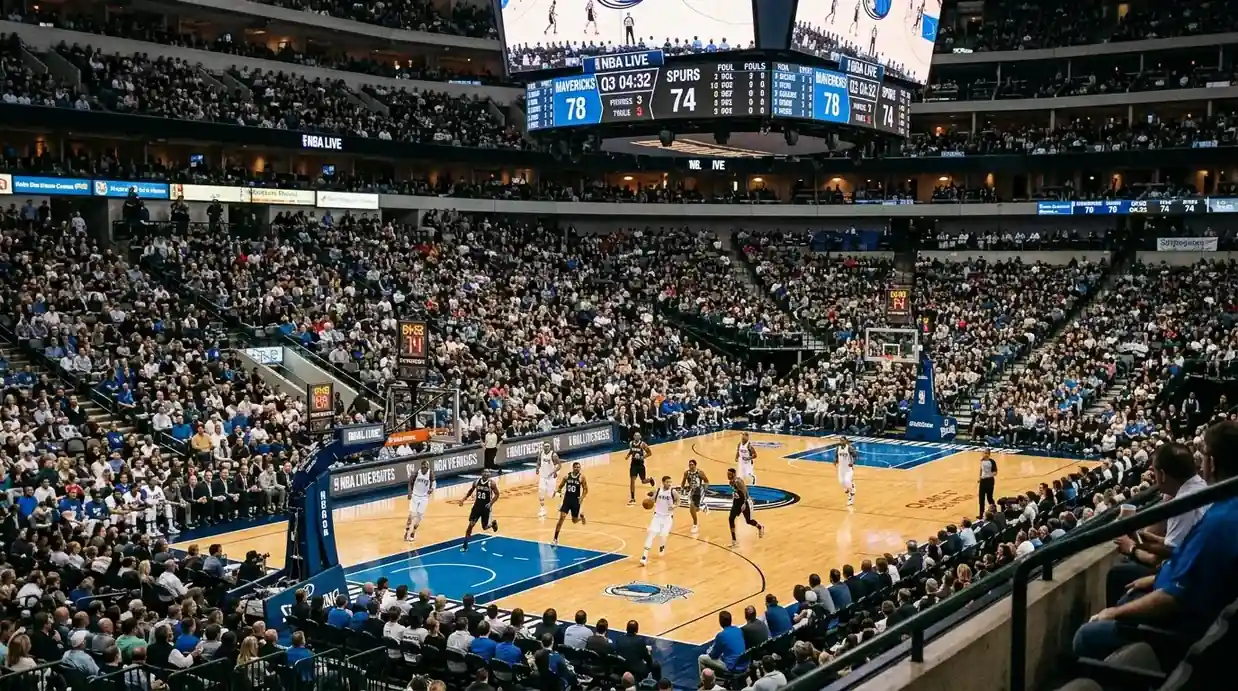
The moment that converted me from a pre-game-only bettor into a live betting enthusiast came during a random Wednesday night game in January. A team I’d backed pre-game fell behind by 14 in the first quarter, and the live spread ballooned to +8.5 at halftime. I knew the pre-game spread had been -3, and nothing about the first half suggested a structural collapse — the losing team had missed eight open three-pointers and was shooting 22% from deep against a season average of 37%. I took the live spread, they came back to win by four, and I’ve never looked at in-play markets the same way since.
The NBA Finals in 2025 drew 32.4 million viewers with 41% watching from outside the US and Canada. That global audience fuels live betting volumes that now rival pre-game handles on marquee nights. For UK punters watching late-night NBA action, in-play markets offer something pre-game bets cannot: the chance to react to what you’re actually seeing rather than what you predicted hours earlier.
See also: nba betting online for the latest NBA guides.
How NBA Live Betting Lines Move
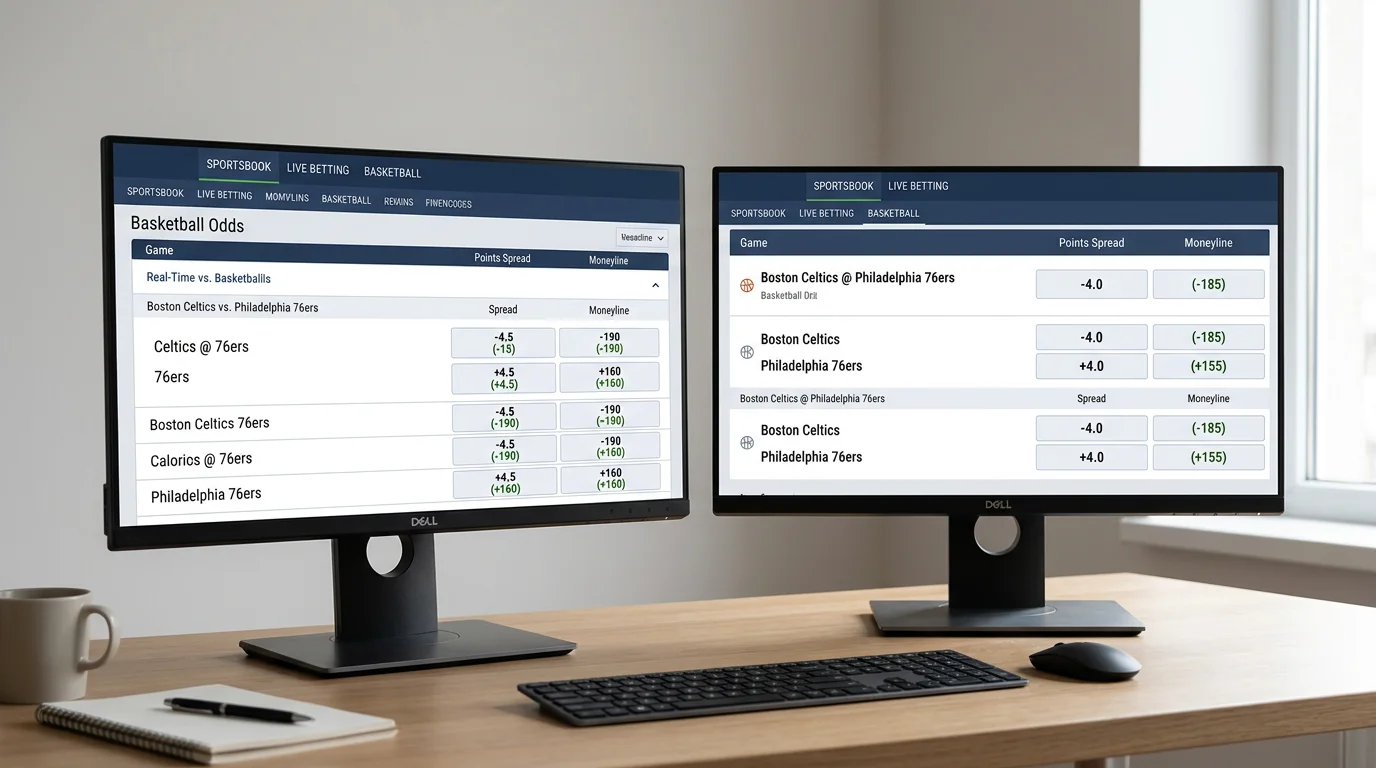
Live odds are recalculated continuously, typically updating after every possession or significant event — a made basket, a turnover, a foul, a timeout. The sportsbook’s algorithm ingests the current score, time remaining, and team strength ratings, then outputs an updated spread, moneyline, and total. The maths behind it is elegant but mechanical, and that’s precisely where human observation creates an advantage.
The algorithm doesn’t know that a team’s star player is limping after an awkward landing. It doesn’t register that a coach has switched to a zone defence that’s disrupting the opponent’s offence. It doesn’t factor in the emotional shift when a team makes a late first-quarter run after being down 12. These qualitative inputs take time to filter into the line through betting volume, and during that delay the live odds are mispriced. Sharp live bettors exploit the gap between what the algorithm sees — score and time — and what the human eye notices.
Line movement during timeouts is particularly interesting. When a coach calls a timeout to stop a run, the live market pauses briefly, then reopens at an adjusted price. But the timeout itself is a signal: the coach recognises the problem and is about to address it. If the team trailing has been beaten by a specific play that a timeout adjustment can neutralise, the live line immediately after the timeout often overcorrects — giving too much credit to the team on the run and not enough to the adjustment about to be deployed.
Pre-Game Research That Pays Off In Play
Live betting rewards people who’ve done their homework before the game starts. My pre-game research generates a set of thresholds I watch for during the game: if Team A falls behind by more than 10 in the first half but their three-point shooting is below their season average, the live spread is likely overstating the deficit. If Team B’s bench outperforms their starters in the second quarter, the second-half total might be underpriced.
Professional handicappers hit 47-49% on pre-game spreads and totals. In live markets, the edge potential is wider because the pricing is less precise and the competition from sharps is thinner — most professional bettors still focus their volume on pre-game lines where liquidity is deeper. The trade-off is speed: live markets demand quick decisions, and hesitation costs you the price.
I prepare three to five “if-then” scenarios for every game I plan to watch live. If the pace in the first quarter is above 105 possessions per 48 minutes, I look at the live total. If a key defender picks up two early fouls, I look at the opposing team’s live spread. If the game is within five points at halftime despite one team shooting significantly below their averages, I take the regression candidate at the live price. These aren’t predictions — they’re triggers that direct my attention to specific markets at specific moments.
Quarter and Half Markets as Live Entry Points
Full-game live spreads get the most attention, but quarter and half markets are where I find the most consistent value during a broadcast. Research by García et al. found shooting efficiency declines with an effect size of -1.27 between the first and fourth quarters, which means third-quarter scoring tends to be more volatile as halftime adjustments take hold and fatigue begins accumulating. That volatility creates wider pricing errors in live third-quarter totals than in the full-game equivalent.
Second-half live bets are my highest-conviction in-play market. By halftime, you’ve seen 24 minutes of actual basketball. You know the pace, you know which rotations are working, and you know whether the coaching staff has made schematic adjustments. Betting on the second-half spread or total at halftime combines pre-game research with 24 minutes of real data — it’s the sweet spot between pre-game prediction and full-game live betting.
One specific pattern I watch for: blowouts that trigger garbage time. When a game is decided midway through the third quarter, starters sit and bench players run higher-paced, less disciplined basketball. The live fourth-quarter total often stays anchored to the game-wide pace, but garbage-time quarters frequently produce higher combined scoring. It’s a narrow angle, but it fires two or three times per week during a full NBA slate.
Managing Speed and Discipline in Live NBA Markets
The biggest threat in live betting isn’t bad analysis — it’s impulsive action. The market moves fast, the game is exciting, and the temptation to chase a live bet because you “feel” the momentum shifting is constant. I enforce a personal rule: no live bet without a pre-game scenario backing it up. If I didn’t identify the situation in my pre-game preparation, I don’t bet on it in play. That rule cuts my live betting volume by at least half, and it’s the reason my live betting record is consistently better than my pre-game record.
Master in-play wagering during NBA clutch time betting moments.
Stake sizing requires adjustment too. I use 60-70% of my standard unit for live bets, because the inherent uncertainty is higher and the emotional intensity of betting while watching can skew my sizing instincts upward. NBA games tip off between 11 PM and 3:30 AM UK time, which means you’re placing live bets late at night when your cognitive sharpness is naturally declining. Smaller stakes counterbalance that fatigue factor.
If you’re building live bets around individual players, the live NBA betting fundamentals provide the framework for reading in-play markets, and pairing that with specific player analysis creates the sharpest edge available in the in-play NBA market.
Can I cash out NBA live bets at UK sportsbooks?
Most major UK operators offer cash out on live NBA bets. The cash-out value fluctuates with the live odds, so it changes after every possession. Some operators also offer partial cash out, letting you lock in a portion of your position while leaving the rest active. Check the specific operator’s terms, as not every live market supports cash out.
What is the best quarter for live NBA betting?
The third quarter tends to offer the widest pricing inefficiencies because halftime adjustments create volatile scoring patterns that algorithms struggle to price quickly. Second-half spreads and totals at halftime also provide strong entry points because you’re combining pre-game research with 24 minutes of observed data.
Created by the ”nba Betting Online” editorial team.