NBA Betting Bankroll Management: Stake Sizing That Survives a Full Season
 Available in US
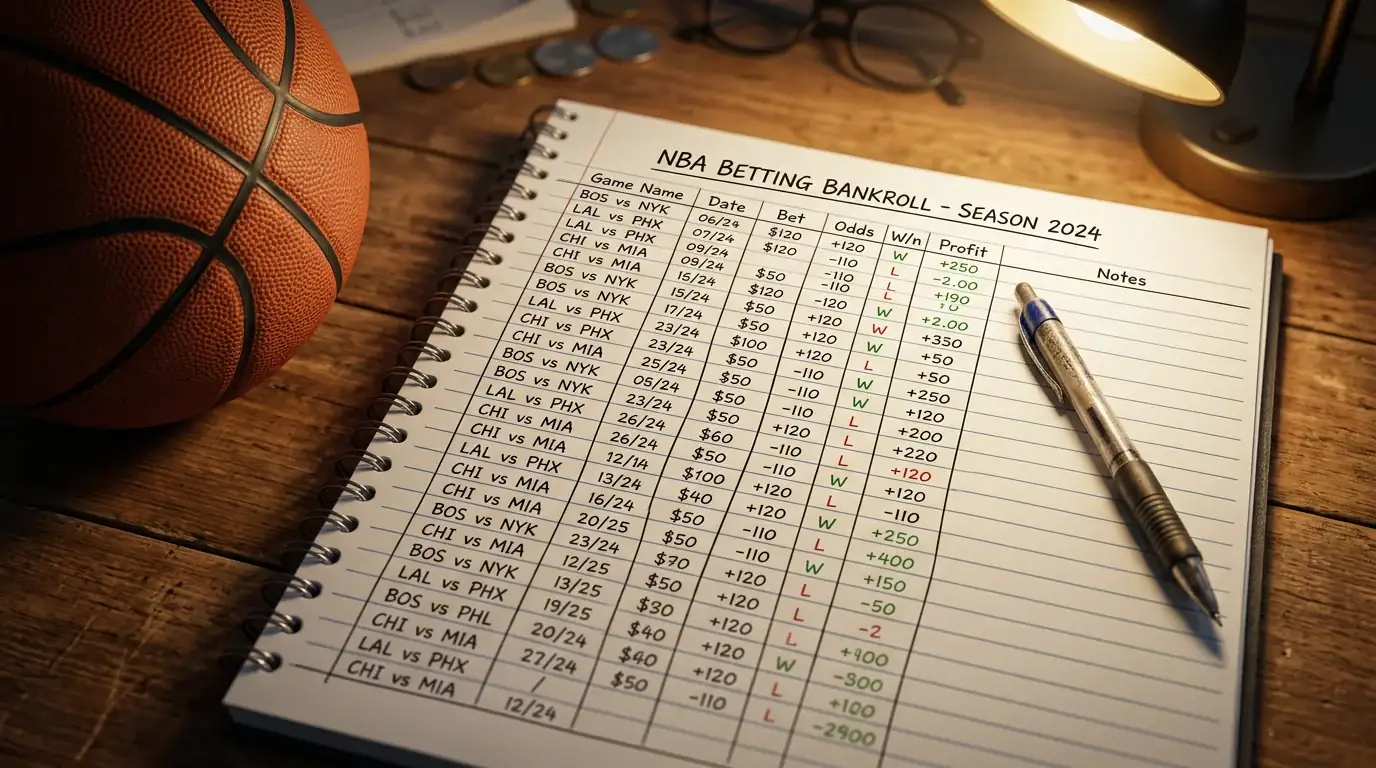
I blew my first serious bankroll in six weeks. Not through bad picks — my win rate was actually respectable at 53% against the spread — but through reckless sizing. A three-bet losing streak would trigger a doubling of stakes, and the inevitable seven-game cold spell that every NBA bettor endures turned a 500-pound bankroll into zero. The picks weren’t the problem. The money management was catastrophic. That experience cost me cash but bought me the most valuable lesson in sports betting: the best analysis in the world is worthless without a staking system that survives variance.
Explore nba betting online for smart NBA wagering tips.
Flat Staking Versus Percentage-of-Bankroll Models
Two dominant frameworks exist, and both have survived decades of use because they both work — provided you actually follow them.
Flat staking is the simpler approach. You designate a fixed stake — your “unit” — and bet that amount on every selection regardless of confidence level. If your bankroll is 1,000 pounds and your unit is 20 pounds (2%), every bet costs 20 pounds whether it’s your strongest pick of the week or a marginal value spot. The advantage is discipline. There’s no decision to make about how much to bet, which eliminates the temptation to oversize on “locks” — a word I banned from my vocabulary after that six-week disaster. Professional handicappers hit 47-49% on spreads and totals over large samples, which means even strong bettors lose nearly half their bets. Flat staking ensures no single loss, or cluster of losses, threatens your bankroll.
Percentage-of-bankroll staking adjusts your unit as your bankroll fluctuates. You bet a fixed percentage — say, 2% — of your current bankroll on each wager. When you’re winning, your unit grows. When you’re losing, it shrinks. The mathematical advantage is that you can never reach zero (though you can get painfully close), and winning streaks compound more aggressively than under flat staking. The drawback is psychological: as your bankroll drops, your unit drops too, and betting 12 pounds instead of 20 feels like a retreat. Human nature pushes back against the shrinkage, and many bettors override the model precisely when they should be following it.
I use a hybrid. My base unit is 2% of my starting seasonal bankroll, flat across all standard bets. I allow myself to increase to 3% for situations where three or more independent data points converge on the same side, which happens roughly once every two weeks. I never go below my base unit and never above 3%. That structure keeps me disciplined without removing all flexibility.
The NBA Season Is a 1,230-Game Sample — Act Like It
The regular season runs 82 games per team across 30 teams, producing 1,230 individual games from October to April. Add the playoffs and you’re approaching 1,350. That’s a massive sample, and it means short-term variance is guaranteed. A bettor who places 300 wagers across the season at a 54% win rate — which is genuinely excellent — will still experience losing weeks, losing fortnights, and possibly a losing month. The maths doesn’t lie: at 54% over 300 bets, there’s roughly a 10% chance of hitting a run of 10 or more consecutive losses at some point during the season. If your bankroll can’t absorb that streak at your current unit size, the unit is too large.
I start each season by running a simple simulation: at my target win rate and unit size, what’s the worst drawdown I can expect with 95% confidence? If that drawdown exceeds 25% of my bankroll, I reduce my unit until the expected worst case stays within tolerance. The simulation takes five minutes in a spreadsheet, and it’s prevented me from over-sizing every season since I started using it.
The UK gambling market reflects this long-view reality. About 10% of UK adults bet on sports online, but the ones who sustain the habit over years — rather than depositing, losing, and disappearing — are overwhelmingly the ones who treat bankroll management as non-negotiable infrastructure rather than optional best practice.
Handling Losing Streaks Without Chasing
Chasing losses is the single most destructive behaviour in sports betting. It looks different for everyone — doubling stakes, adding extra bets to recover, switching to unfamiliar markets in search of a quick win — but the underlying impulse is the same: refusing to accept that losing is a normal part of the process. Basketball generates 15-18% of global bookmaker activity, and every active bettor in that ecosystem will face extended losing runs. The difference between profitable bettors and broke ones is how they respond.
My protocol after three consecutive losses: review each bet for process quality, not outcome. Did I follow my research routine? Did I bet within my unit structure? Did I have genuine value, or was I reaching? If the process was sound and the losses were variance, I change nothing. If the process was compromised — I was tired, I skipped the injury check, I sized up because I was frustrated — I take a 48-hour break. Every UK sportsbook offers a time-out feature that enforces the pause automatically.
The emotional side of bankroll management is harder than the mathematical side. Losing 10 bets in a row when your analysis was solid creates a specific kind of frustration that pushes you toward irrational action. Acknowledging that frustration without acting on it is a skill, and like all skills, it improves with practice. The first losing streak is agony. The fifth is just Tuesday.
New to NBA wagering? Start with our NBA betting for beginners guide.
Seasonal Bankroll Cycles and When to Reassess
I reset my bankroll calculation twice per season: once at the All-Star break and once before the playoffs. The All-Star break is a natural checkpoint. If my bankroll has grown, I increase my unit to maintain the 2% ratio. If it’s shrunk, I reduce it. The reset prevents me from playing with “house money” mentality, where a profitable first half leads to reckless second-half sizing.
The playoffs demand a separate bankroll conversation. Fewer games, higher stakes per game, and tighter markets mean the variance profile changes. I allocate a fixed playoff bankroll — typically 20% of my total — and manage it independently. If the playoff bankroll is exhausted, I stop betting until the following season. That hard stop has saved me from compounding late-season losses into an early off-season deficit.
Remote Gaming Duty rising to 40% from April 2026 has squeezed operator margins, which means the promotional cushion that padded recreational bankrolls through free bets and deposit matches is thinning. Your bankroll management needs to be more rigorous now than in previous years because the external subsidy from sportsbook promotions is worth less in real terms. The era of relying on welcome offers to offset poor staking discipline is over.
What percentage of my bankroll should I bet on each NBA game?
A conservative standard is 1-2% per bet. At 2%, a 500-pound bankroll produces a 10-pound unit. This sizing allows you to absorb losing streaks of 10 or more consecutive bets without crippling your bankroll. Higher-conviction bets can justify 3%, but exceeding that level introduces significant ruin risk over a full season.
How do I rebuild an NBA betting bankroll after a losing streak?
Reduce your unit size to match your current bankroll, not your original bankroll. If you started with 1,000 pounds at a 20-pound unit and your bankroll has dropped to 600 pounds, your unit should drop to 12 pounds. Continue following your standard selection process. Attempting to recover quickly by increasing stakes is the primary cause of total bankroll depletion.
Published by the nba Betting Online team.